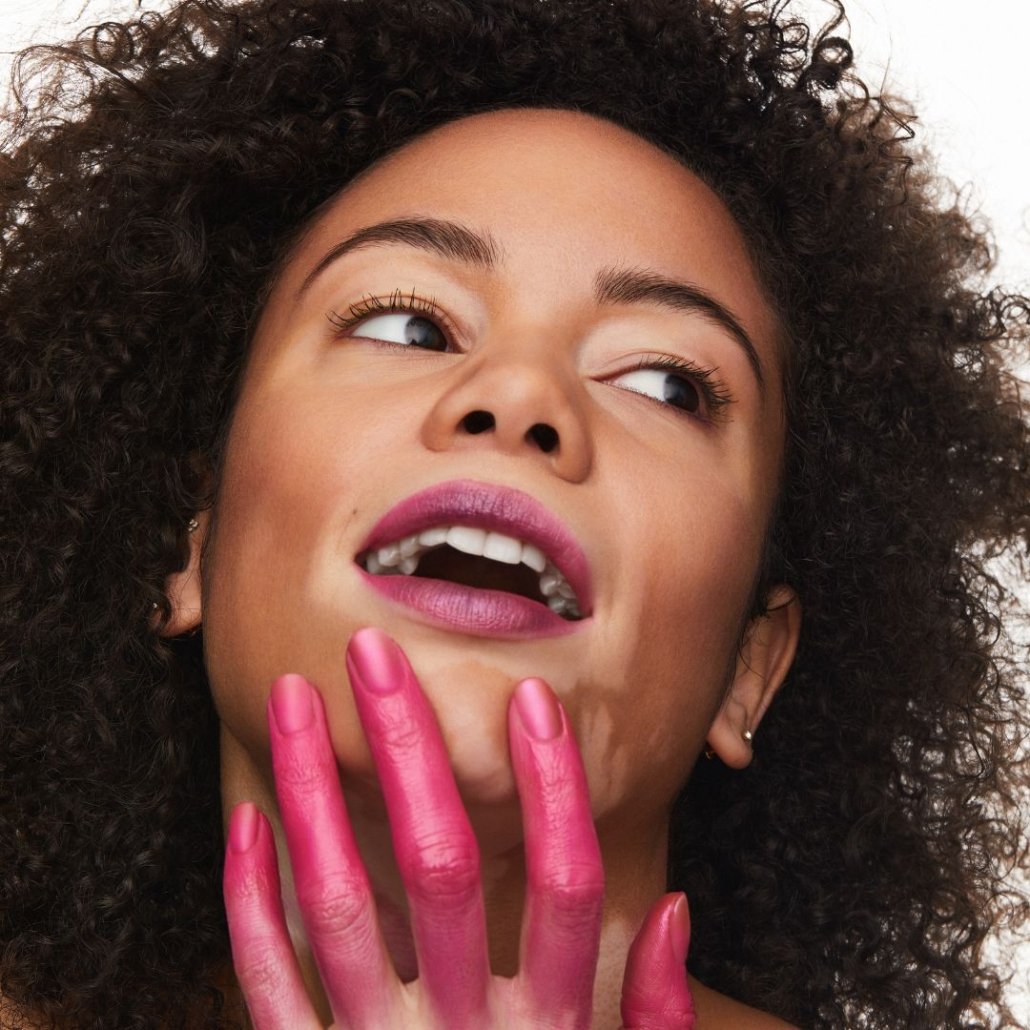
My introduction to the world starts with my skin. Even off of the billboards, I am on display for people to examine. That’s when I remember I have vitiligo. For years, people and interviewers would ask different versions of the same question: “what does your skin mean to you?” I would answer, yet I felt a disconnect from those questions. They felt existential; layered with a deeper meaning than I had to offer. What does my skin mean to me and who am I without it?
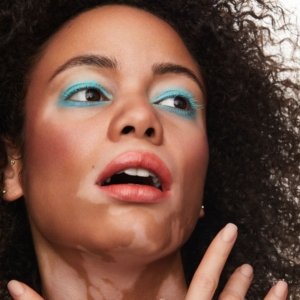 As a child and teenager, the fluctuating hormones triggering acne and weight changes, coupled with a rare skin disorder, meant I was profoundly uncomfortable in my own body. As an adult, much of my 20s was dedicated to modelling, which meant that I got to model and, for the first time in my life, I didn’t feel abnormal, but intriguing and beautiful.
I hid behind my skin throughout my modelling career; expecting my vitiligo to be my personality, source of income, and self-esteem. And despite the ever-changing design of my vitiligo, I forced myself to fit into a box of acceptance. I didn’t want to feel like the girl in junior high again. Yet, I was still uncomfortable.
After stepping away from modelling, I pursued my identity outside of the box. What does my skin mean to me and who am I without it? I am realizing that as my skin changes, like my interests, or my hair, or my food hyperfixation of the month, it does not have to mean one thing. It grows as I grow and evolves as I evolve.
It is the freest thing about me.